Building Intrinsic Motivation in Kids
How families move from external rewards to habits kids choose—without losing the fun of progress.
General family organization guidance from the Habisun editorial team. It is not medical, behavioral, financial, or legal advice.
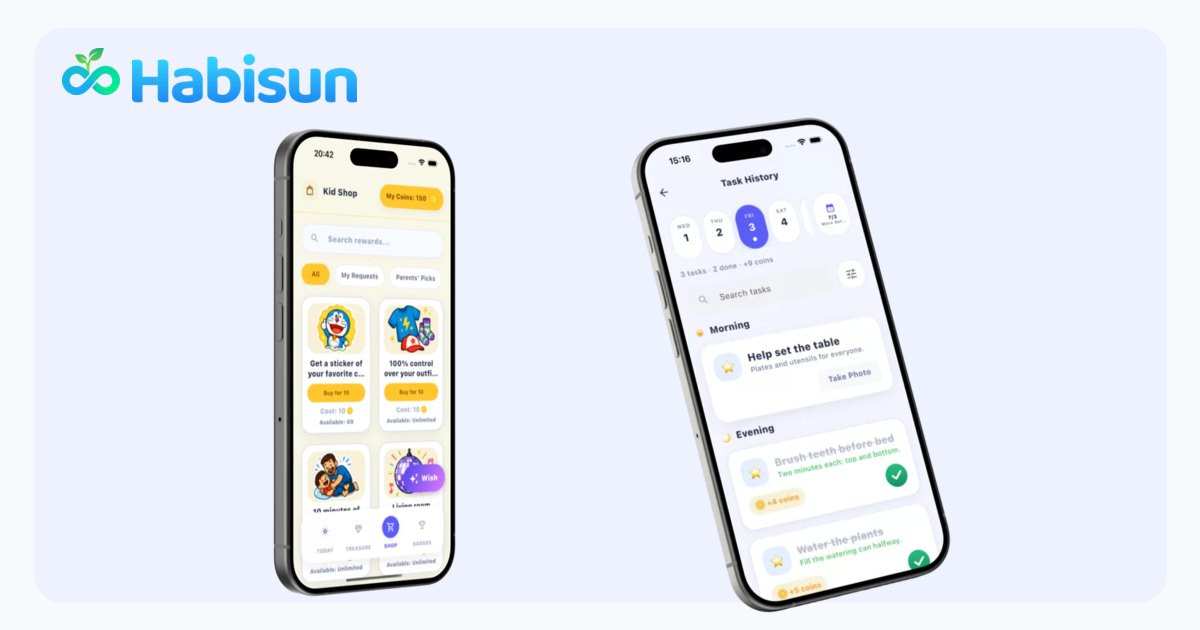
External rewards are a starting point, not the finish line
Stickers, coins, and allowance work because they make invisible effort visible. For many children—especially ages 5–10—external motivation is developmentally normal. The goal is not to remove rewards overnight, but to pair them with routines kids can own.
Habisun is built around that bridge: clear tasks, visible progress, and parent-approved rewards that stay fair.
Three habits that support intrinsic motivation
1. Let kids help choose tasks
When children pick one or two chores from a short list, compliance rises. Ownership beats surprise assignments. In Habisun, parents still set boundaries, but kids see their list—not a generic chart.
2. Connect rewards to effort, not perfection
Praise the process (“you remembered without a reminder”) more than the outcome alone. Partial credit and gentle streaks reduce all-or-nothing burnout—common in ADHD-friendly households.
3. Fade rewards slowly
As a habit sticks, shrink the prize: fewer coins for the same task, or swap a big weekly reward for a small daily win. The routine stays; the bribe shrinks.
Where Habisun fits
- Tasks and routines keep structure without nagging
- Coins and wishlist maintain motivation while you fade external prizes
- Growth reports show categories improving over time—evidence kids can feel proud of
Start small this week
Pick one habit (bedtime prep, dishes, reading). Set a clear reward for two weeks. Then discuss what felt easier—and whether your child wants to keep the habit with a smaller reward.
Download Habisun to try the free plan, or explore our kids habit app overview.